Bicycle Accident Lawyer in Los Angeles
When a car hits you on a bike, the deck feels stacked against you
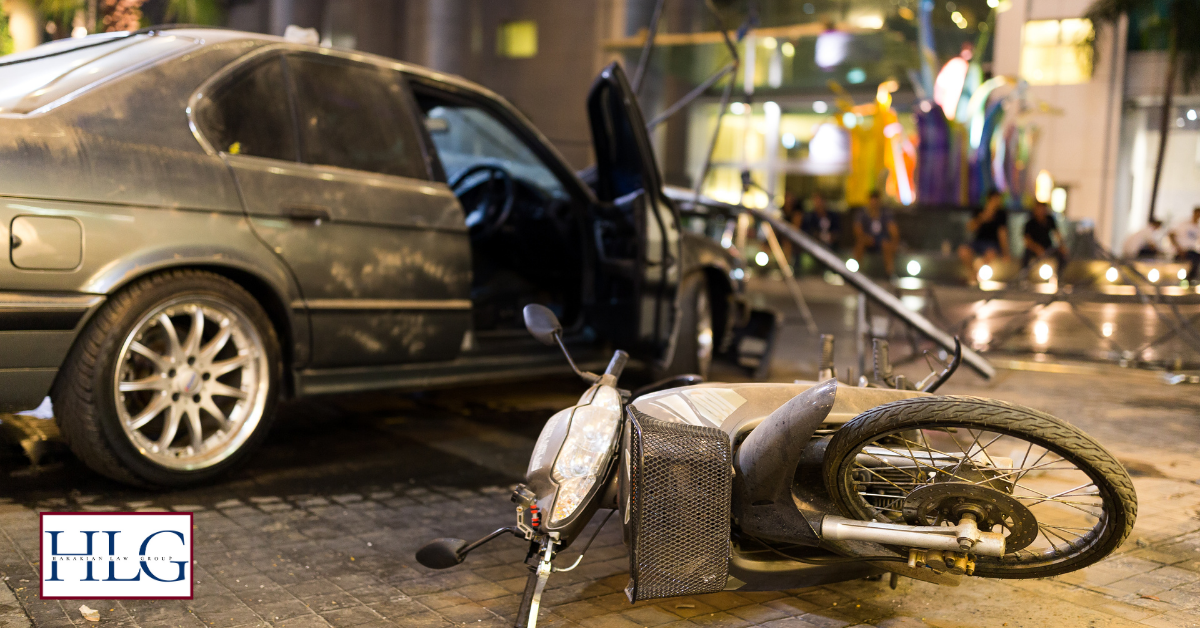
A bicycle crash can leave you hurt, unable to work, and unsure how to pay your bills. At the same time, the driver’s insurer may blame you, question your choices, or ask for a statement before you understand your rights.
Hakakian Law helps injured cyclists understand what California law allows and what steps can protect their claim. The firm examines the conduct of everyone involved and challenges unfair blame with personal, assertive representation. The next sections explain how fault works, what proof can support your case, and why bicycle claims require a focused legal approach.
How fault really works in a California bike accident
California’s pure comparative negligence rule allows an injured cyclist to recover compensation even when the cyclist bears most of the fault. A court or insurer assigns each person a percentage of responsibility, and the cyclist’s compensation falls by the cyclist’s percentage. For example, a cyclist with $100,000 in damages could recover $30,000 if the driver was 30 percent responsible.
Every percentage point affects the final payment, so insurers often focus on the cyclist’s speed, lane position, or reaction before impact. An insurer may argue that a cyclist entered traffic too quickly or failed to avoid the collision. Even when those arguments establish some cyclist fault, they do not erase a driver’s share of responsibility.
California law generally gives cyclists the same roadway rights and duties as motor vehicle drivers under Vehicle Code section 21200. A driver turning left must yield to an oncoming cyclist who presents a hazard. A driver entering from a driveway or side street must also yield to approaching traffic, including bicycles. Crosswalk claims depend partly on whether the cyclist was riding or walking the bicycle, but drivers must still use reasonable care to avoid a collision.
California’s passing law also shapes fault when a driver overtakes a bicycle. A driver should move into another lane when a safe lane change is possible. When the driver cannot change lanes, the driver must leave at least three feet between the vehicle and cyclist. A close pass can support a claim even without contact if it forces the cyclist to swerve and crash. Road width, traffic, visibility, and vehicle speed can affect whether the driver passed safely.
A cyclist’s position within the lane does not decide fault by itself. Cyclists may move away from the right edge to avoid parked cars, debris, damaged pavement, or another hazard. They may also take more of the lane when it is too narrow for a bicycle and vehicle to travel safely side by side. A fair fault analysis considers why the cyclist moved, what the driver could see, and whether each person had enough time and space to prevent the crash.
Dooring: a different kind of bike accident claim
A dooring claim focuses on the decision to open a vehicle door into a cyclist’s path, even when the vehicle itself never moves. California Vehicle Code 22517 prohibits anyone from opening a door on the traffic side unless doing so is reasonably safe and will not interfere with traffic. The rule applies to doors that block bike lanes as well as doors that extend into ordinary travel lanes.
A violation of Section 22517 can support negligence per se. Under that theory, the cyclist can establish the door opener’s breach of legal duty by showing that the person violated a safety law intended to prevent that type of collision. A cyclist must still connect the violation to the crash, injuries, and claimed losses.
The person who opened the door usually bears primary responsibility. That person may be the driver or a passenger. A vehicle owner may share liability under rules covering permissive use or negligent entrustment. An employer may also face responsibility when an employee causes the crash while performing job duties, such as making deliveries or transporting passengers.
Dooring often causes injuries through more than one impact. A cyclist may strike the door and then hit the pavement or another vehicle. Common injuries include broken bones, traumatic brain injuries, spinal damage, internal injuries, and severe road rash. Insurers may still argue that the cyclist could have avoided the door, but California’s comparative fault rules treat that argument as a question about each party’s share of responsibility rather than an automatic bar to recovery.
The evidence that wins a disputed bike accident claim
Video ranks first because it can show the driver’s movement, the cyclist’s position, the traffic signal, and the seconds before impact. A bicycle accident lawyer should quickly check nearby businesses, homes, Metro buses, dashcams, and traffic cameras. Some surveillance systems overwrite recordings within 72 hours, while doorbell cameras may retain clips for only 7 to 14 days.
Scene evidence ranks next because road conditions can change within hours. Photos can document skid marks, debris, vehicle damage, sight obstructions, and the bicycle’s resting position. Measurements may also establish whether a driver left enough passing space or whether a parked vehicle’s door extended into the cyclist’s path.
Independent witnesses can resolve details that a camera missed. A bystander may have seen a driver turn without yielding, open a door into traffic, or pass too closely. An attorney should locate witnesses within days and record formal statements before memories fade or contact information becomes outdated. Police officers do not always identify every person who saw the collision.
A police report provides useful leads, but the officer’s fault opinion does not decide a civil claim. Under California Vehicle Code 20013 an accident report cannot serve as evidence of fault at trial. Officers may also overlook rules that let cyclists leave the right edge to avoid hazards or occupy a lane that cannot be shared safely. The report still helps confirm the location, time, involved parties, and known witnesses.
Fast evidence collection limits an insurer’s ability to replace missing facts with assumptions about cyclist speed, visibility, or lane position. Hakakian Law can investigate the scene, request recordings, and secure witness accounts while the strongest proof remains available.
Why a bike accident claim isn't the same as a car accident claim
A bicycle usually has no auto policy attached to it, so an injured cyclist must identify every available source of payment. The at-fault driver’s bodily injury coverage usually provides the first source. Health insurance can cover immediate treatment, but it does not compensate you for lost income, pain, or other damages. Your health insurer may also seek repayment from a later settlement.
Uninsured and underinsured motorist coverage can provide another source when the driver has no insurance or carries limits below the value of your injuries. A policy issued to you or someone in your household may cover you while cycling, even though you were not inside an insured car. Coverage depends on the policy language, your relationship to the policyholder, and other conditions, so a household auto policy requires careful review. In a standard car claim, your own vehicle policy is usually easy to identify. A cyclist accident lawyer may need to investigate several household policies before determining what coverage applies.
Helmet use does not decide whether an adult cyclist can bring a claim. California requires biclycle helmets only for riders under 18. An adult’s decision not to wear one does not violate that law, establish automatic fault, or bar compensation.
An insurer may still argue that a helmet could have reduced a particular head injury. The insurer must connect the lack of a helmet to the specific harm rather than use it to blame the cyclist for the collision. Helmet use generally has no connection to damages such as broken bones, road rash, or lost wages. A Los Angeles bicycle accident attorney can separate questions about who caused the crash from narrower arguments about whether protective equipment affected an injury.
Why injured cyclists in Los Angeles choose Hakakian Law
Hakakian Law builds bicycle accident claims around evidence before that evidence disappears. The firm moves quickly to request traffic and security footage, contact witnesses, inspect the crash scene, and document bicycle damage. A detailed investigation helps Shawn Hakakian challenge unfair claims about right-of-way, lane position, helmet use, or cyclist behavior.
Shawn takes a personal, hands-on role in each case. He reviews the facts, explains your options in plain language, and keeps you informed as the claim moves forward. Hakakian Law’s family-style approach gives you direct attention while the firm deals firmly with insurers and defense lawyers.
A free consultation gives you a chance to discuss the crash and learn what evidence may support your claim. You pay no attorney fee unless Hakakian Law wins compensation for you. Call or contact the firm to speak with a Los Angeles bicycle accident attorney.
Common questions from bicycle accident victims
Can I recover damages if I was not wearing a helmet?
California requires bicycle helmets only for riders under 18, and an adult’s helmet use does not automatically determine fault. Helmet non-use may affect damages for a head injury only if the insurer proves a helmet would have prevented or reduced that specific injury. Hakakian Law can challenge unsupported helmet arguments and pursue compensation for your documented losses.
What if the police report blames me?
A police report records the officer’s initial assessment, but it does not settle civil liability. Under California law, an officer´s fault opinion generally cannot serve as trial evidence. Hakakian Law can examine video, witness accounts, physical evidence, and bicycle-specific traffic rules to determine fault independently.
What if the driver has no insurance?
An uninsured-driver claim seeks payment through other available coverage when the responsible driver lacks liability insurance. Hakakian Law can review your household auto policies for uninsured or underinsured motorist coverage, even if you were cycling when the crash occurred. A full coverage review may identify compensation beyond the driver’s personal assets.
How long do I have to file a bicycle accident claim?
California generally gives an injured person two years to file a personal injury lawsuit, but exceptions can shorten or extend that period. A claim involving a public entity, such as one based on a dangerous road condition, generally requires an administrative claim within six month. Prompt legal review helps preserve your claim before the applicable deadline expires.
Disclaimer: This post is considered attorney advertising and is for informational purposes only. It does not create an attorney-client relationship. Past results do not guarantee future outcomes.