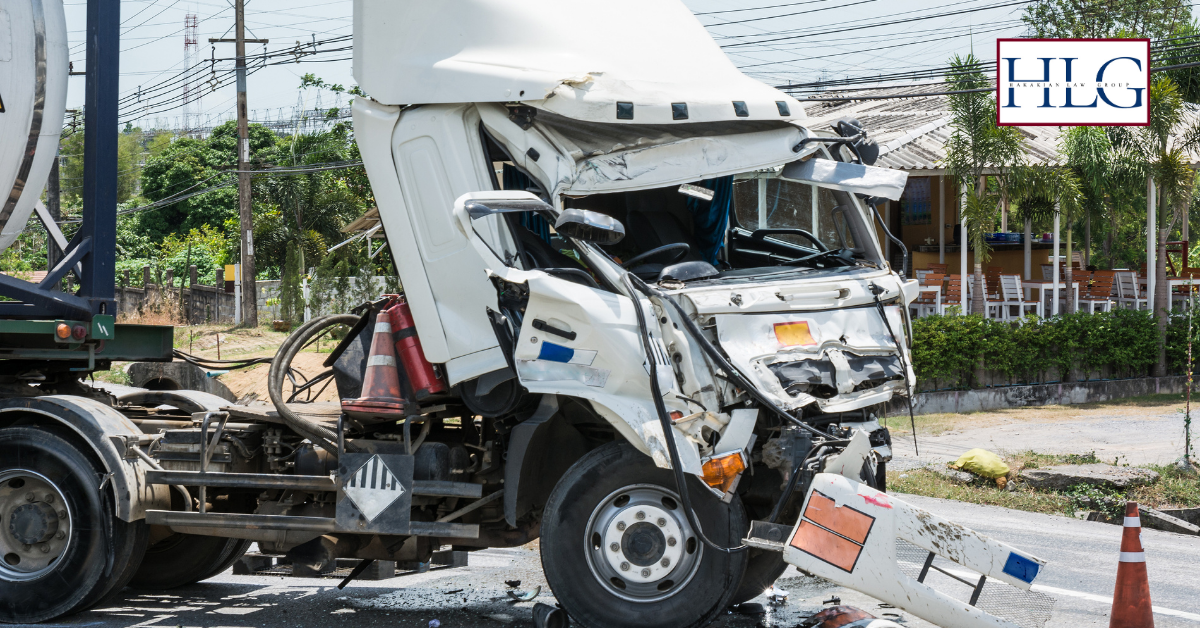
Who Is Liable in a Los Angeles Truck Accident?
Who can be held liable after a Los Angeles truck accident
Liability after a Los Angeles truck accident may extend beyond the person behind the wheel. California law can assign fault to several people or businesses when their conduct contributes to the same crash.
The truck driver may be liable for speeding, unsafe lane changes, or following too closely. A driver may also cause a crash by driving while tired, distracted, or impaired. Ignoring required safety checks can support a negligence claim when a missed problem contributes to the collision.
The motor carrier may be responsible for a driver's negligence committed within the scope of employment. Lawyers call this vicarious liability, which means an employer may answer for an employee's wrongful conduct. A carrier may also face direct liability for hiring an unsafe driver, failing to train or supervise the driver, or keeping an unsafe truck in service. These theories often make the trucking company a primary target in a truck accident claim.
The truck's owner or lessor may share fault if it supplied an unsafe vehicle or failed to perform maintenance it had agreed to handle. Ownership alone may not establish liability. The owner's duties and level of control usually matter.
A maintenance or repair contractor may be liable when poor work contributes to a mechanical failure. Examples include failing to replace worn brakes or improperly repairing steering parts. Work orders and inspection records can connect the contractor's mistake to the crash.
A cargo loader or shipper may bear responsibility for an unbalanced, overweight, or poorly secured load. Shifting cargo can cause a rollover or make the truck difficult to stop. Liability depends on who controlled the loading work and whether the driver could reasonably detect the problem.
A parts manufacturer may face a product liability claim when a defective tire, brake component, or other part causes the crash. The seller or distributor may also bear responsibility in some cases. Product testing, recalls, and expert inspections can help identify a defect.
Another motorist, road contractor, or government agency may contribute to a Los Angeles truck accident. For example, a car could cut off the truck, or an unsafe road condition could affect the driver's ability to avoid a collision. California's comparative fault rules allow responsibility to be divided among everyone whose conduct helped cause the crash.
Liable parties and the evidence tied to each
Truck driver. The driver must operate the truck safely. Speeding, distraction, fatigue, or impairment may establish fault. Driver logs, electronic logging data, video, and witness accounts can show what the driver did before the crash.
Trucking company. The company hires drivers and manages trucking operations. Unsafe hiring, poor training, or pressure to exceed driving limits may make the company liable. Employment files, safety policies, dispatch records, and internal messages can reveal those failures.
Vehicle owner or lessor. The owner or lessor may have a duty to provide a safe truck. Allowing a dangerous vehicle onto the road can support a claim. Lease terms, inspection reports, maintenance duties, and ownership records help define responsibility.
Maintenance contractor. A repair company may be liable when it misses a defect or performs faulty work. Repair orders, maintenance records, inspection reports, and mechanic testimony can connect poor service to a mechanical failure.
Cargo loader or shipper. The party controlling the load must follow applicable weight and securement rules. Overloaded, unbalanced, or unsecured cargo can contribute to a rollover or loss of control. Cargo records, weight tickets, photos, and loading instructions can establish fault.
Parts manufacturer. A manufacturer may bear responsibility for a defective tire, brake, steering component, or other truck part. Expert testing, recall notices, design records, and the damaged part can help prove a defect.
Another road user. Another driver may share fault by cutting off the truck or causing a chain collision. Traffic video, photos, vehicle data, and witness accounts can establish that person’s role.
Federal trucking rules vs. California liability law
Federal trucking rules set safety duties, while California civil law determines legal responsibility for a crash. The Federal Motor Carrier Safety Administration regulates matters such as driving hours, electronic logs, driver qualifications, vehicle inspections, and required repairs. A carrier’s operation and route can affect whether federal rules or similar California commercial vehicle rules apply.
A safety violation can provide strong evidence of negligence, but the violation does not automatically decide a truck accident claim. For example, an hours-of-service violation may help show that a driver stayed behind the wheel too long. The injured person must still connect the excessive driving to fatigue and show that fatigue helped cause the collision. An unrelated paperwork or licensing violation may carry little weight if it had no link to the crash.
California’s negligence per se rule can create a rebuttable presumption of negligence when several conditions are met. The defendant must have violated a law or regulation. The violation must have caused the injury, the rule must have aimed to prevent that type of harm, and the injured person must belong to the group the rule sought to protect. The defendant may present evidence that the conduct was reasonable under the circumstances, and the injured person must still prove causation and damages.
Ordinary negligence can apply when the requirements for negligence per se are not met. In that situation, a truck accident attorney may use an FMCSA rule to help show what a careful driver or carrier should have done. California courts then apply state negligence, employer responsibility, product liability, and comparative fault rules to decide which parties must pay and how much responsibility each party carries. A federal safety violation supports that analysis, but California liability law controls the final allocation of fault.
How fault gets proven: the evidence that matters
Evidence proves fault by linking a specific unsafe act to the collision. A truck accident attorney compares records from several sources because one record rarely tells the full story. Differences between a driver’s account, company files, and electronic data can reveal who caused the crash.
Driver logs and electronic logging device data show when the driver operated the truck, rested, and changed duty status. Dispatch messages, GPS records, fuel receipts, toll records, and delivery schedules can test whether those logs are accurate. These records may show that a driver exceeded driving limits or that a carrier pressured the driver to meet an unsafe schedule.
Truck electronics can help reconstruct the moments before impact. An event data recorder or engine control module may record speed, braking, throttle use, engine activity, or other vehicle data. The available information depends on the truck and its equipment, so a qualified expert may need to download and interpret it.
Maintenance and inspection files can trace a mechanical problem to the party responsible for preventing it. Repair orders, driver inspection reports, tire records, brake service records, and annual inspection documents may show a known defect or missed repair. Cargo manifests, weight tickets, loading instructions, and securement records can show whether excess weight or shifting cargo affected the driver’s control.
Employment files can reveal whether the trucking company hired, trained, and supervised the driver with reasonable care. Relevant records may include the driver’s qualifications, driving history, drug and alcohol testing, training, prior safety complaints, and disciplinary history. Company policies and internal messages may also show whether managers ignored unsafe conduct.
Scene evidence helps confirm how the crash happened. Photos can document skid marks, vehicle damage, road conditions, cargo spills, and final vehicle positions. Dashcam footage, nearby security video, traffic cameras, police materials, and witness statements can capture details that electronic records miss.
Trucking companies, insurers, and contractors often control much of this evidence. Some electronic data may be overwritten, while businesses may discard records under routine retention schedules. A lawyer can send a prompt preservation letter, sometimes called a spoliation hold, that identifies the relevant vehicles, devices, documents, and accounts and demands that the recipients protect them. Early preservation gives experts a better chance to examine the truck and recover original data before repair, sale, or deletion changes the available proof.
California's comparative fault rule and shared responsibility
California’s pure comparative negligence rule lets an injured person recover compensation even when that person shares fault. A court reduces the award by the injured person’s percentage of responsibility. For example, a person who suffered $100,000 in damages but carried 20 percent of the fault could recover $80,000.
A jury may divide the remaining fault among several parties. The truck driver might receive 40 percent, the trucking company 30 percent, and a cargo loader 10 percent. Employment records, maintenance files, and cargo documents can help establish each party’s share.
Shared responsibility can make settlement negotiations more complex. California generally treats economic damages, such as medical bills and lost income, differently from non-economic damages, such as pain and suffering. A liable defendant may bear broader responsibility for economic losses, while each defendant generally pays non-economic damages according to its assigned fault.
A truck accident attorney should investigate every responsible party and available insurance policy. Strong evidence against each defendant can affect settlement offers, payment sources, and the strategy for a truck accident claim.
What compensation may be available
A truck accident claim may seek economic damages for losses that can be documented. These damages may include past and future medical care, lost wages, reduced ability to earn income, vehicle repairs, damaged personal property, and other necessary out-of-pocket costs.
Non-economic damages cover the personal effects of an injury. Depending on the facts, a victim may seek compensation for physical pain, emotional distress, disability, disfigurement, and loss of enjoyment of life. Medical records, treatment notes, photos, and statements about daily limitations can help establish these losses.
California courts may award punitive damages in limited cases involving oppression, fraud, or malice. For example, punitive damages may become an issue if a defendant knowingly ignored a serious safety risk. Ordinary carelessness does not support this type of award, and special rules may restrict punitive damages against an employer for an employee’s conduct.
When a truck crash causes a death, eligible family members may bring a wrongful death claim. Recoverable losses may include funeral costs, lost financial support, and the loss of the person’s care and companionship. A separate survival claim may address certain losses the deceased person suffered before death.
The compensation available depends on the injuries, supporting evidence, insurance coverage, and each party’s share of fault. No lawyer can guarantee a specific result before reviewing those facts.
Deadlines and evidence you could lose
California generally gives an injured person two years from the date of a truck accident to file a personal injury lawsuit. Filing an insurance claim does not pause that deadline. Certain facts can shorten or extend the filing period, so you should not assume that two years applies to every claim.
Claims involving a government agency follow a faster schedule. An injured person usually must submit an administrative claim within six months when a government vehicle, unsafe public road, or public employee may share responsibility. Additional deadlines apply after the agency responds.
Important truck evidence may disappear long before either deadline. Dashcam and surveillance footage can be overwritten within days or weeks. Trucking companies may retain electronic logging device data, inspection reports, maintenance files, and driver records under different schedules, but routine deletion can still remove evidence needed to prove fault.
A truck accident attorney can send preservation letters that direct the trucking company and other parties to keep relevant records. You should also save your photos, medical records, repair estimates, witness information, and communications with insurers. Early preservation gives your lawyer more evidence to evaluate every party that may be responsible.
Immediate next steps after a Los Angeles truck accident
- Call 911 and get to safety. Move away from traffic if you can do so safely. Ask for police and emergency medical help.
- Accept medical care. Truck crash injuries may not cause symptoms right away. Follow the doctor’s instructions, attend later appointments, and keep copies of bills and medical records.
- Document the scene if your condition allows. Photograph the vehicles, damage, skid marks, road conditions, cargo, company names, and license plates. Save dashcam footage and nearby security video.
- Collect contact information. Get the truck driver’s name, employer, insurance details, and license information. Ask witnesses for their names and phone numbers.
- Limit statements about fault. Give police accurate facts, but do not guess or admit blame. Avoid recorded statements or settlement papers from an insurer before you understand your injuries and legal options.
- Preserve crash-related records. Keep damaged property, repair estimates, wage records, receipts, photos, messages, and insurance letters. Do not post details about the crash or your recovery on social media.
- Request legal help early. A truck accident attorney can seek driver logs, electronic data, inspection records, and video before the trucking company deletes or overwrites them.
Hakakian Law offers free case evaluations for Los Angeles truck accident victims. The firm provides personal attention and aggressive representation while investigating who may share responsibility. No lawyer can guarantee a particular result.
Frequently asked questions
Can the trucking company be sued directly?
Yes. A trucking company may be responsible for unsafe hiring, poor driver training, rule violations, or failure to maintain the truck. The company may also share responsibility for a driver’s actions.
Does a police citation decide who was at fault?
No. A citation may support a truck accident claim, but insurers and courts also review video, witness accounts, vehicle data, and company records. An officer’s decision does not settle civil liability.
What if the truck was leased?
A lease does not prevent a claim against the trucking company, vehicle owner, driver, or another responsible business. The lease terms and each party’s control over the truck help determine who may be liable.
What if the driver was an independent contractor?
Calling a driver an independent contractor does not automatically protect the trucking company. Investigators examine who controlled the driver’s work, owned the truck, set delivery schedules, and handled safety duties.
Can a defective truck part share the blame?
Yes. A tire, brake, steering component, or other defective part may make its manufacturer or seller responsible. The injured person must connect the defect to the crash or resulting injuries.
Can several parties share responsibility?
Yes. California law can divide fault among the driver, trucking company, maintenance provider, cargo loader, manufacturer, and other road users. Each party may owe a share based on its role in causing the Los Angeles truck accident.
Get help evaluating your truck accident claim
Contact Hakakian Law for a free consultation about your Los Angeles truck accident claim. The firm provides personal attention and aggressive advocacy with no upfront cost.
Truck accident liability can involve several people or companies, and records may disappear before fault becomes clear. Early legal guidance can help preserve driver data, maintenance records, video, and other evidence that may protect the value of your claim.
Disclaimer: This post is considered attorney advertising and is for informational purposes only. It does not create an attorney-client relationship. Past results do not guarantee future outcomes.